

Updated July 2026.
A good Qi2 25W charger is not simply the model with the largest “25W” mark on its packaging. Buyers need to verify four things: the certification belongs to the exact product, the target phone can use the intended profile, the supplied power path is adequate, and the enclosure can manage heat during a realistic charging session.
1. Look up the exact model in the WPC database
Ask the supplier for the Qi ID, then search the WPC certified product database. Match the brand, product name, manufacturer part number, product type, version and power profile. A screenshot or certificate from another model is not a substitute for the public record.
If the record is not available, the accurate wording is “designed for Qi2 25W” or “certification pending,” depending on the actual project stage. Do not print a Qi or Qi2 logo until the licensing and certification conditions for that exact product are satisfied.
2. Define the device and case matrix
Create a short list of the phones that matter commercially. Test them with the operating-system versions and case types your customers will use. Record whether each device attaches securely, starts charging consistently and maintains the intended mode.
Thick cases, metal plates, wallets, camera guards and incorrectly placed magnetic rings can change the result. “Qi compatible” is too broad for a purchasing specification; a model-by-model matrix is easier to test and easier for customer support to explain.
3. Check the complete input path
Ask which USB-C PD profile the charger requests and which adapter was used for the performance test. Confirm the cable current rating and whether the quoted package includes the same adapter and cable. If the retail product excludes an adapter, the required input should be visible on the product page, packaging and manual.
This step prevents a common field problem: a capable charger connected to an old low-power adapter. The product may still charge, but the customer will not see the expected speed.
4. Review sustained performance, not a peak reading
Request a time-based thermal and power result in the final enclosure. Useful data identifies the phone, battery state, ambient temperature, adapter, case and measurement points. It should show what happens after the product warms up.
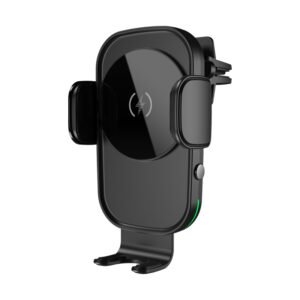
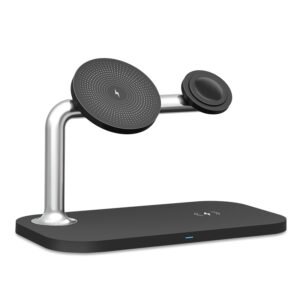
For a stand or folding charger, test more than one angle and orientation. For a multi-device station, operate the phone, watch and earbud zones together. Shared input power and heat can change the result compared with a phone-only test.
5. Check mechanical details
- Does the camera bump clear the charging surface?
- Is magnetic force suitable with and without a normal case?
- Does the hinge hold its angle after repeated use?
- Are metal fasteners and decorative parts kept out of sensitive coil areas?
- Can the cable and connector withstand the expected bend and pull loads?
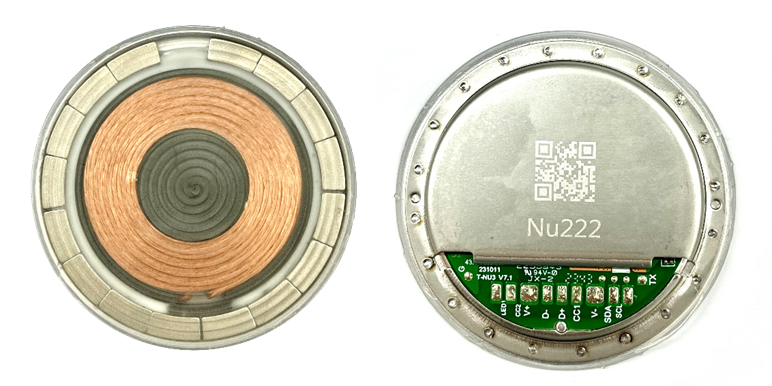
For custom products, ask the supplier to confirm the actual coil-to-surface stack. A late cosmetic change can add distance or introduce loss, forcing another electrical and thermal review.
6. Separate product certification from market compliance
Qi certification and market-access reports answer different questions. Depending on where and how the charger is sold, the finished product may need additional safety, EMC, radio, materials or efficiency documentation. The quotation should say which reports are included, which model and configuration they cover, and whether a new test is needed after customization.
7. Evaluate the supplier’s change-control process
A sample is only useful if production can reproduce it. Ask how firmware, controller IC, coil, magnets, ferrite, thermal materials and power components are controlled. If a critical part changes, the supplier should have a review and revalidation process instead of treating it as an ordinary substitution.
A concise RFQ checklist
Send the supplier: target phone list, intended markets, annual volume, branding and finish, package contents, input adapter, required certification, acceptable surface temperature, drop or hinge requirements and desired production date. Ask for the proposed Qi ID or certification plan, a device matrix, thermal test conditions and a clear list of customization limits.
CowinLink can review these inputs for a finished charger or a custom transmitter platform. Start with our wireless charging project form; include photos or drawings when the charger is part of a larger product.
Primary references: WPC Qi overview and WPC certified product database.