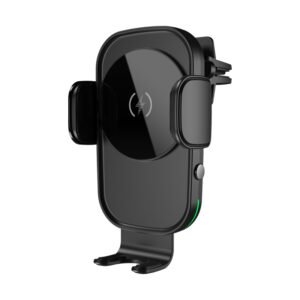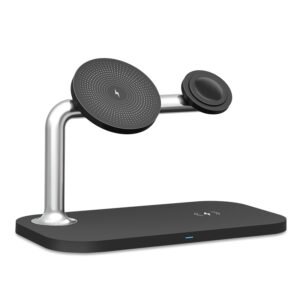


Two enquiries can both ask for “a custom 15W wireless charger” and require completely different products. One customer may need a private-label desktop pad for retail. Another may need a transmitter hidden inside medical equipment. The wattage is similar; the engineering, certification and manufacturing work is not.
When you contact an OEM wireless charger manufacturer, a structured brief helps the factory recommend the right starting point and quote the work honestly. It does not need to be a long formal specification. Ten clear decisions are more useful than fifty pages of marketing language.
1. Describe the application in one paragraph
Tell us what the product is, who uses it and where it charges. Is it a phone accessory, vehicle product, furniture installation or an embedded TX/RX system? Will the charger be sold alone or built into a larger product?
Include the main reason for customization: brand appearance, mechanical fit, charging performance, sealed construction, special receiver or cost target. This helps us distinguish a catalog modification from a new engineering program.
2. List target devices and power claims
Provide the phone, watch, earbud, battery or custom receiver types the product must support. For open consumer products, specify the intended Qi or Qi2 claim and target output. For a matched embedded system, provide the RX load and battery information.
Avoid using “fast charge all devices” as an acceptance requirement. Different receivers and operating conditions manage power differently. A useful brief identifies priority devices and defines how performance will be measured.
If the product will carry a Qi logo or certification statement, say so at the beginning. The WPC distinguishes certified products from loose claims such as “Qi compatible,” and certified models should be verifiable in its database.
3. Define the input source
State whether the product uses USB-C, vehicle input, a fixed DC supply or another source. Is the adapter included? Which cable length and rating are planned?
The input chain affects sustained output, connector temperature, cost and user experience. A high-power charger supplied with an undersized adapter cannot meet its product promise consistently.
4. Share the industrial design status
Send 2D drawings, 3D files or sketches. Mark the maximum product outline, charging surface, coil position, connector, buttons, LEDs and keep-out areas. List preferred materials and colors.
If the design is not frozen, that is useful information. Our engineers can review coil position, wall thickness, magnets, ferrite and thermal paths before tooling. If the design is already tooled, identify which dimensions can still change.
For embedded projects, a cross-section through the TX and RX coils is essential. Include every cover, adhesive, air gap and nearby metal part.
5. Separate cosmetic customization from engineering changes
Logo printing, color, packaging and cable selection may fit a private-label route. Changing housing shape, connector, surface material, coil structure or power architecture can require engineering and renewed validation.
This distinction matters for certification. The WPC explains that substantially similar rebranding allows only limited changes; shape, connector and surface-material changes can require retesting. Tell us which features are mandatory so we can propose the correct route.
6. List markets and compliance requirements
Identify the countries and sales channels. The responsible compliance plan may include wireless-power certification, product safety, EMC, radio or environmental requirements depending on the product.
Do not simply write “all certificates.” Ask your compliance adviser or retailer for the exact market requirements. The factory can provide existing reports, support new testing and control the production configuration, but the final plan belongs to the brand placing the product on the market.
7. Define quality acceptance
Share the expected product life, warranty and critical tests. For a foldable charger, hinge cycles and cable flex may matter. For a car mount, clamp cycles and vibration matter. For a sealed module, thermal and ingress-related product testing may dominate.
Useful approval criteria include:
- Charging-device matrix and alignment window
- Sustained power and temperature conditions
- Cosmetic standard and limit samples
- Drop, cycle or vibration requirements
- Adapter and cable configuration
- Firmware and indicator behavior
- Packaging transit test
- End-of-line test coverage and records
A sample is easier to approve when both sides know the test method.
8. Provide volume, launch timing and forecast shape
State prototype quantity, first order, annual estimate and any seasonal peak. A range is acceptable. Volume affects tooling, fixture, component strategy, packaging process and commercial terms.
If the launch date is fixed, include the dates for design freeze, certification samples, pilot run and mass-production shipment. Certification and tooling should not be compressed into one line called “lead time.”
9. Clarify deliverables and ownership
For a finished OEM product, deliverables may include branded units, packaging, test reports and production inspection records. For a custom TX/RX project, the customer may also need schematics, interface documents, firmware configuration, test fixtures or integration support.
Agree which design files are delivered, which remain factory manufacturing data and how future changes are managed. Discuss tooling ownership, sample retention and confidentiality before development begins.
10. Give a realistic cost target
A target cost helps the factory make engineering trade-offs. State the incoterm, packaging assumption, adapter inclusion and volume behind the number. Comparing a bare module price with a certified retail product price creates confusion.
If the target is not known, identify the target market position and must-have features. We can then present options with the cost drivers visible rather than removing protection or validation work silently.
A one-page brief template
A practical first email can include:
- Product/application:
- Target users and environment:
- Required devices and power:
- Input source and included accessories:
- Size, materials and design files:
- Required markets/certifications:
- Must-have functions:
- Validation and quality expectations:
- Prototype, first order and annual volume:
- Target launch date and cost range:
- Required engineering deliverables:
Attach drawings and photos where available. If some fields are unknown, mark them “open” rather than guessing.
How an OEM wireless charger manufacturer reviews the brief
We first decide whether the project fits a finished wireless charger platform or needs custom TX/RX engineering. We then identify technical risks, missing inputs, sample stages and the evidence required for approval.
Send the brief through the CowinLink project enquiry page. A clear brief does not lock the design prematurely. It gives the factory and OEM a common starting point, which makes later decisions faster, more human and easier to document. A responsible OEM wireless charger manufacturer should also identify missing inputs before confirming cost and schedule.