
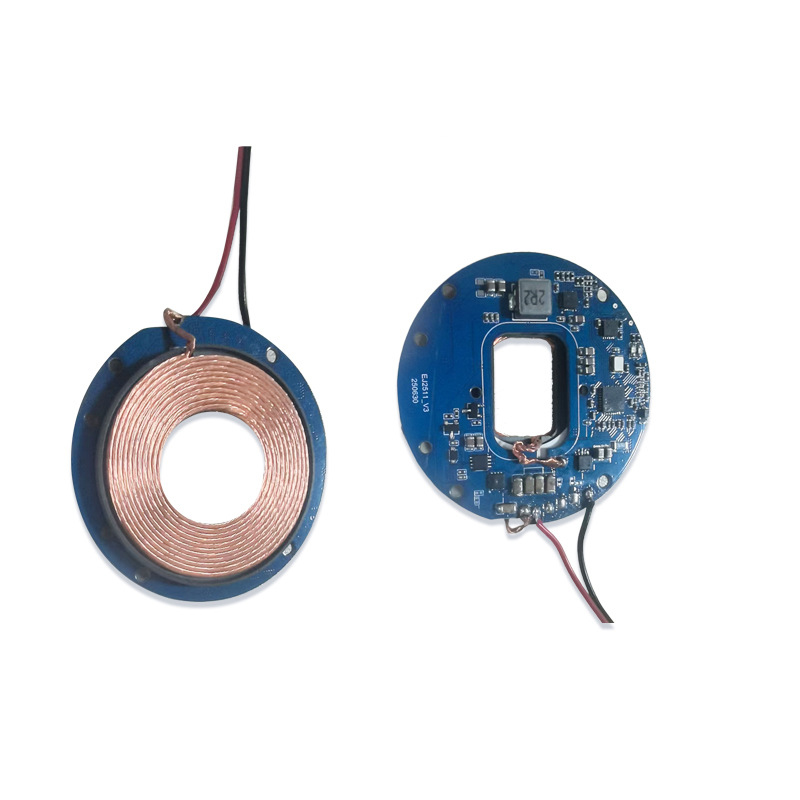
MPP-TX25 Wireless Charging TX Module | Designed for Qi2 25W
Certification status: pending. MPP-TX25 is a magnetic transmitter development platform designed for Qi2 25W applications. It must not be represented as Qi2 Certified until the final model is registered in the WPC product database.
By submitting this form, you agree that CowinLink may use your information to respond to your enquiry. Read our Privacy Policy.
Details about MPP-TX25 Wireless Charging TX Module | Designed for Qi2 25W
Magnetic TX development platform for Qi2 25W projects
MPP-TX25 is intended for OEM teams evaluating a magnetic wireless charging transmitter. The current design target is Qi2 25W. WPC certification is pending, so the module and any final host product must be described accordingly until a valid registration can be linked from the WPC database.
Reference configuration
| Parameter | Current design target |
|---|---|
| Wireless power | Up to 25W, subject to receiver, adapter and thermal validation |
| Input | USB-C PD power source; final profiles confirmed per project |
| Alignment | Magnetic Power Profile alignment concept |
| Nominal module envelope | 60 × 60 × 4.2mm; customization requires re-validation |
| FOD and thermal control | Validated with the final coil, housing and receiver combination |
| Certification | Designed for Qi2 25W; WPC certification pending |
Why host-product integration matters
Magnets, metal parts, surface thickness, coil placement, shielding, firmware and the selected USB-C adapter can change charging performance and foreign-object detection. A successful module test does not automatically certify a redesigned enclosure or final product.
OEM work scope
- Mechanical stack-up and magnetic alignment review.
- Adapter, power-path and thermal-budget review.
- PCB, connector, coil and firmware adaptation where feasible.
- Pre-compliance testing and support for the agreed certification route.
- Pilot-build and production-test planning.
For an evaluation, provide the host-product drawing, target receiver list, adapter specification, surface material, expected quantity and launch schedule.
