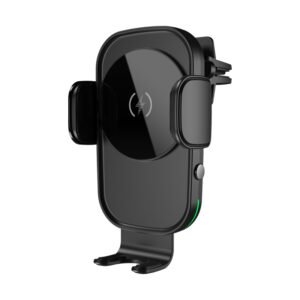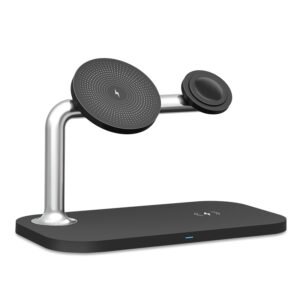


A wireless charging tray looks simple from the driver’s seat. Under the surface, it operates in a difficult environment: high cabin temperatures, continuous vibration, metal structures, electrical noise and phones that vary in size, camera position and case thickness. For an automotive OEM or Tier supplier, the transmitter must be developed as part of the console rather than added after the surrounding parts are finished.
Start with the phone and use-case matrix
List the phones and case conditions that matter in the target market. Decide whether the phone lies flat, stands upright or attaches magnetically. Include camera-bump clearance and the way the driver places and removes the device without looking away from the road.
A large open tray may need mechanical guidance or a multi-coil approach to make placement repeatable. A magnetic design may locate the phone more precisely, but the magnet, coil and surrounding trim must be developed as one assembly.
Design for the vehicle temperature range
A closed car can become much hotter than a room-temperature lab. Solar load, HVAC airflow, charging loss and heat from nearby electronics all affect available charging power. Establish the ambient range, accessible-surface limit and power-derating strategy before selecting the enclosure material.
Thermal validation should use the production-intent console stack. Testing an exposed board cannot represent a coil mounted behind trim, adhesive, illumination features and a rubber mat.
Define the vehicle power interface
The transmitter input may see cranking events, transients, reverse polarity, supply variation and conducted noise that do not exist in a desktop charger. The OEM specification should identify the nominal input, abnormal conditions, sleep-current target, wake behaviour and host communication.
If the charger reports status to the vehicle, define the interface and diagnostics early. Firmware update, fault codes and end-of-line test access become more difficult after the console architecture is frozen.
Control metal and foreign objects
Coins, keys, rings and metal case accessories can enter a vehicle tray. The mechanical design should discourage them from remaining over the active area, while the transmitter’s detection and protection behaviour must be validated with defined objects and positions.
Metal brackets, fasteners, decorative trim and cable shields inside the console can also affect field distribution and heating. Review the complete CAD assembly around the coil, not only the visible surface.
Plan EMC work early
A wireless power transmitter switches significant current close to vehicle antennas, keyless-entry systems, displays, audio and control networks. Layout, shielding, frequency control, grounding and cable routing should be reviewed before the first production-intent PCB.
Run pre-compliance tests in representative operating modes, including no phone, charging, misalignment and fault conditions. Late EMC fixes can change coil position, thermal performance and cost.
Use a measurable validation plan
- charging start and sustained power across the device matrix;
- coil, PCB and surface temperature across ambient conditions;
- misalignment and foreign-object behaviour;
- vibration, shock, connector retention and trim wear;
- supply transients, standby current and recovery from faults;
- EMC performance in all operating modes;
- production tolerances for coil and magnet placement.
Certification and supplier evidence
The WPC publishes guidance for automotive aftermarket Qi chargers and maintains a public database for certified products. Automotive inline assemblies and OEM programs may have additional customer-specific requirements. Do not assume that a consumer charging board, or another product’s Qi ID, covers the finished vehicle installation.
Ask the supplier to state exactly which subsystem or product is certified, which configuration was tested and which changes require revalidation. Market and OEM compliance requirements should be tracked separately from the Qi record.
CowinLink automotive project inputs
For a feasibility review, send the target devices, console drawing, trim materials and thickness, input specification, host interface, ambient and surface-temperature limits, EMC requirements, certification goal and projected volume. CowinLink can review standard and custom transmitter architectures, including coil, PCB and firmware options.
Start a discussion through our wireless charging project form. Early mechanical and electrical information is the fastest way to identify integration risk before tooling.
References: WPC automotive aftermarket guidance and WPC certified product database.